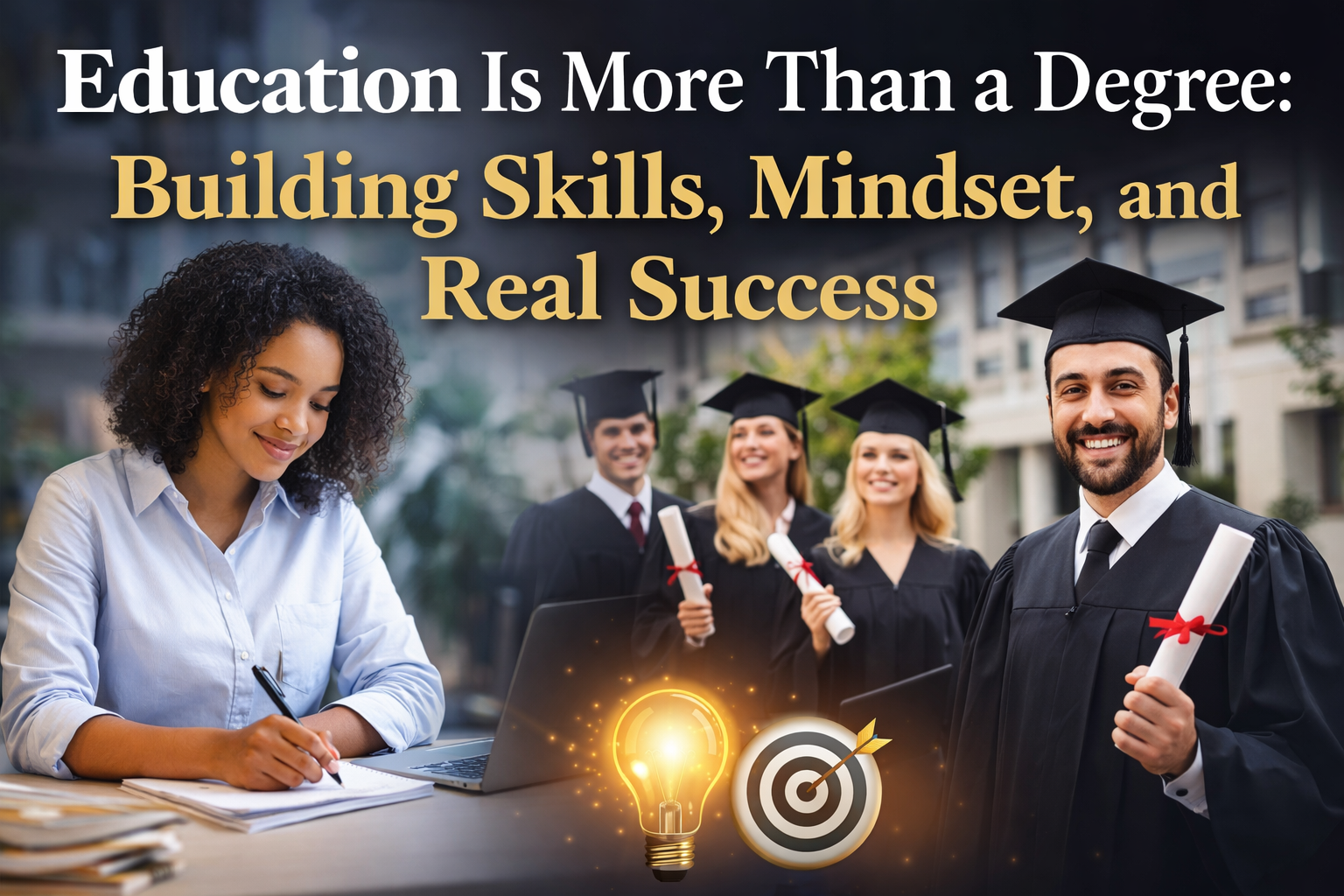
In today’s fast-changing world, education is often measured by degrees, certificates, and academic achievements. However, true education goes far beyond a piece of paper. It is about developing skills, shaping mindset, and creating real success in life.
While degrees can open doors, it is the knowledge, experience, and personal growth that determine how far you go. Let’s explore why education is much more than just earning a degree.
The Limitations of Degrees
A degree is important—it validates your academic learning and can help you start your career. But relying solely on a degree is no longer enough in today’s competitive environment.
Many successful individuals have proven that skills and mindset often matter more than formal education. Employers today are not just looking for qualifications; they seek individuals who can solve problems, think critically, and adapt to change.
This shift highlights a key truth: education is not confined to classrooms or textbooks.
Building Real-World Skills 💡
One of the most valuable aspects of education is skill development. Skills such as communication, leadership, creativity, and critical thinking are essential for success in any field.
These skills are often developed through:
- Practical experience
- Internships and projects
- Real-life challenges
- Continuous learning
In many cases, individuals with strong practical skills outperform those with higher academic degrees but limited real-world experience.
The Power of Mindset 🧠
Education shapes how we think. A strong mindset—focused on growth, resilience, and adaptability—is crucial in achieving success.
A growth mindset encourages individuals to:
- Learn from failures
- Embrace challenges
- Stay curious and open-minded
- Continuously improve
This mindset is often the difference between those who succeed and those who give up when faced with difficulties.
Learning Beyond the Classroom 🌍
True education happens everywhere—not just in schools or universities. Life experiences, travel, conversations, and self-learning all contribute to personal growth.
Today, with access to the internet, knowledge is more accessible than ever. People can learn new skills, explore new fields, and gain expertise without formal education.
This means that anyone willing to learn can grow, regardless of their academic background.
Success Is Defined by Impact, Not Degrees
Real success is not measured by how many degrees you have but by the impact you create. Whether it’s building a business, helping others, or contributing to society, success comes from applying knowledge effectively.
Many entrepreneurs, innovators, and leaders have achieved greatness by focusing on skills, passion, and persistence, rather than just academic qualifications.
Continuous Learning Is the Key 🔑
Education does not end with graduation—it is a lifelong journey. The most successful people are those who continue to learn, adapt, and evolve.
Continuous learning can include:
- Reading books
- Taking online courses
- Attending workshops
- Learning from mentors
This ongoing process ensures that individuals stay relevant and competitive in a rapidly changing world.
Balancing Degrees and Skills
While this article emphasizes that education is more than a degree, it’s important to understand that degrees still have value. The key is to balance academic knowledge with practical skills and personal development.
A well-rounded individual combines:
- Academic knowledge
- Practical experience
- Emotional intelligence
- Strong mindset
This combination leads to true and lasting success.
FAQs
Is a degree still important today?
Yes, a degree is important for many careers, but it should be complemented with skills and real-world experience.
What skills matter most in today’s world?
Communication, problem-solving, adaptability, and critical thinking are among the most valuable skills.
Can someone succeed without a degree?
Yes, many people succeed without formal degrees by developing strong skills, mindset, and practical experience.
How can I improve my mindset?
Focus on learning from failures, staying positive, and continuously challenging yourself to grow.
What is the real purpose of education?
The real purpose of education is to develop knowledge, skills, character, and the ability to create meaningful impact in life.

Be First to Comment