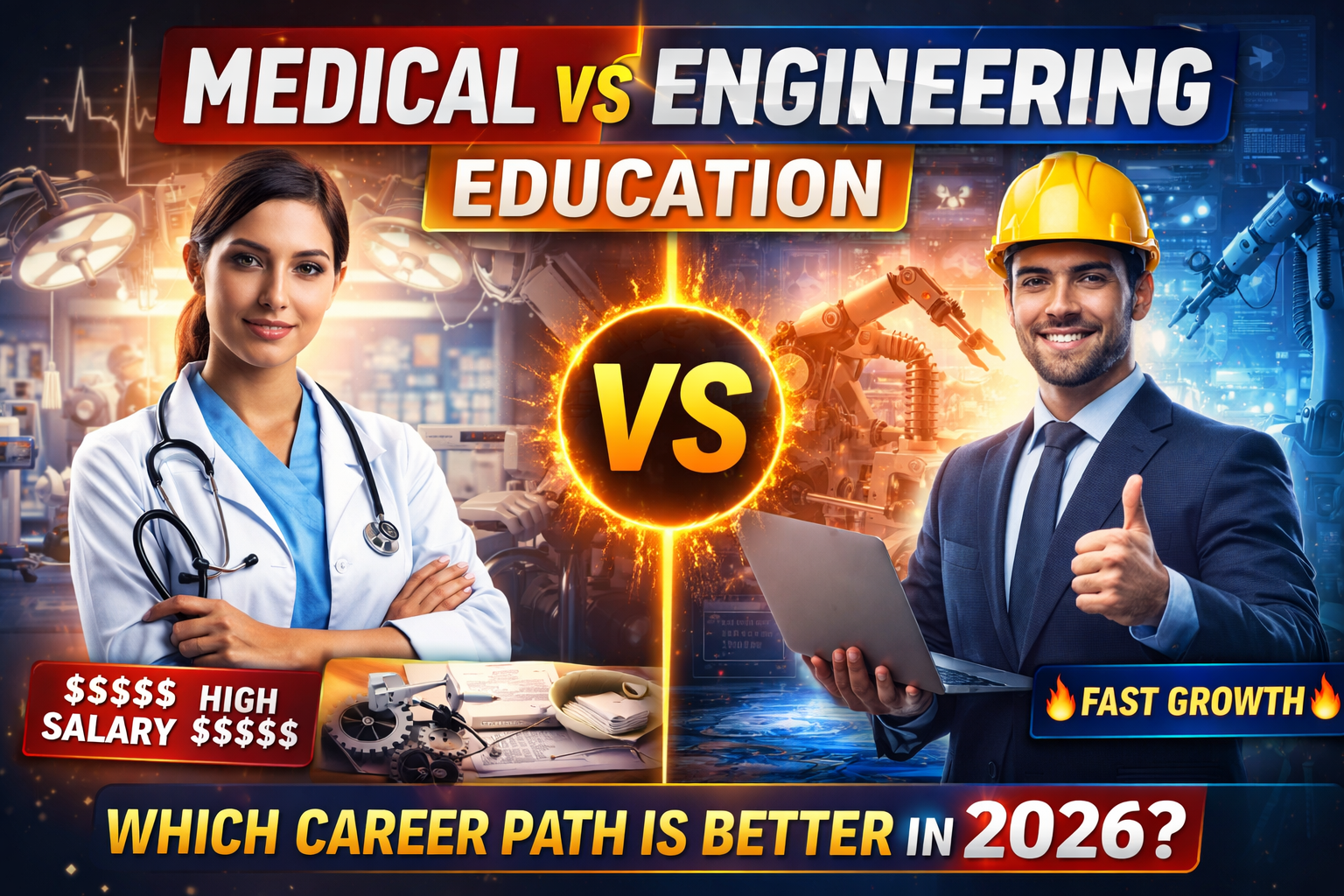
Choosing between medical and engineering education is one of the biggest decisions students face—especially in 2026, where both fields are evolving rapidly with technology, global demand, and changing job markets. Each path offers unique advantages, challenges, and long-term rewards. So, which one is better? The answer depends on your interests, strengths, and career goals.
Let’s break it down clearly so you can make the right decision.
Before we dive in, let’s explore what medical education entails.
Medical education focuses on diagnosing, treating, and preventing diseases. Students typically pursue degrees like MBBS, followed by specialization.
Key Features:
- Long duration (5–10+ years, including specialization)
- Requires strong dedication and patience
- High responsibility and social respect
Career Options:
- Doctor (General or Specialist)
- Surgeon
- Medical Researcher
- Public Health Expert
Next, let’s look at what engineering education involves.
Engineering involves applying science and mathematics to design, build, and innovate solutions—from software to infrastructure.
Key Features:
- Duration: 4–5 years (Bachelor’s degree)
- Wide range of specializations
- Strong focus on innovation and technology
Popular Fields:
- Computer Science & AI
- Mechanical Engineering
- Civil Engineering
- Electrical Engineering
3. Duration & Difficulty
- Medical: Longer and more intense. Requires years of study, internships, and residency.
- Engineering: Shorter compared to medicine, but still challenging depending on specialization.
👉 If you want a quicker entry into the workforce, engineering has an advantage.
👉 If you’re willing to invest more time in a specialized career, medicine is worth it.
👉 If you’re willing to invest more time in a specialized career, medicine is worth it.
4. Cost of Education
- Medical: Generally more expensive, especially in private institutions or abroad.
- Engineering: More affordable overall, with many scholarship options.
👉 Budget-conscious students often choose engineering unless they secure medical scholarships.
5. Salary & Career Growth (2026)
Medical:
- High earning potential after specialization
- Stable and respected profession
- Demand always exists globally.
Engineering:
- High starting salaries (especially in tech fields like AI and software)
- Rapid career growth
- Opportunities in startups and global companies
👉 In early career stages, engineering pays more quickly.
👉 In the long run, medicine can surpass earnings, especially for specialists.
👉 In the long run, medicine can surpass earnings, especially for specialists.
6. Job Demand & Future Scope
Medical Field:
- Constant global demand
- An aging population increases the need for doctors.
- Growth in telemedicine and healthcare tech
Engineering Field:
- Explosive growth in AI, robotics, and data science
- High demand in tech industries
- Constant need for innovation
👉 Both fields are future-proof, but engineering is evolving faster with technology, while medicine offers long-term stability.
7. Work-Life Balance
- Medical: Long hours, emergency duties, high stress
- Engineering: Generally better work-life balance (depends on job role)
👉 If lifestyle matters, engineering often offers more flexibility.
8. Which One Should You Choose?
Choose Medical if:
- You are passionate about helping people.
- You can handle long-term study and pressure.
- You want a respected and stable career.
Choose Engineering if:
- You love technology and innovation.
- You want quicker career entry.
- You prefer flexibility and diverse opportunities.
Final Verdict (2026)
There is no single “better” option—only the one that fits YOU.
- Best for quick success & tech careers → Engineering
- Best for long-term stability & social impact → Medical
In 2026, the smartest choice is to align your decision with your passion, not just income.
FAQs (Frequently Asked Questions)
Q1: Which is harder, medical or engineering?
Medicine is generally considered harder due to longer duration and intense study requirements.
Medicine is generally considered harder due to longer duration and intense study requirements.
Q2: Which career pays more in 2026?
Engineering offers higher starting salaries, but experienced doctors can earn more in the long run.
Engineering offers higher starting salaries, but experienced doctors can earn more in the long run.
Q3: Can I switch from engineering to medical?
Switching is very difficult because both require completely different academic paths.
Switching is very difficult because both require completely different academic paths.
Q4: Which field is better for studying abroad?
Both are excellent, but engineering offers more flexible and shorter programs internationally.
Both are excellent, but engineering offers more flexible and shorter programs internationally.
Q5: Is AI a threat to these careers?
AI will transform both fields. Engineers will build AI systems, while doctors will use AI tools for better diagnosis.
AI will transform both fields. Engineers will build AI systems, while doctors will use AI tools for better diagnosis.





Be First to Comment